When a new member starts
The intro session
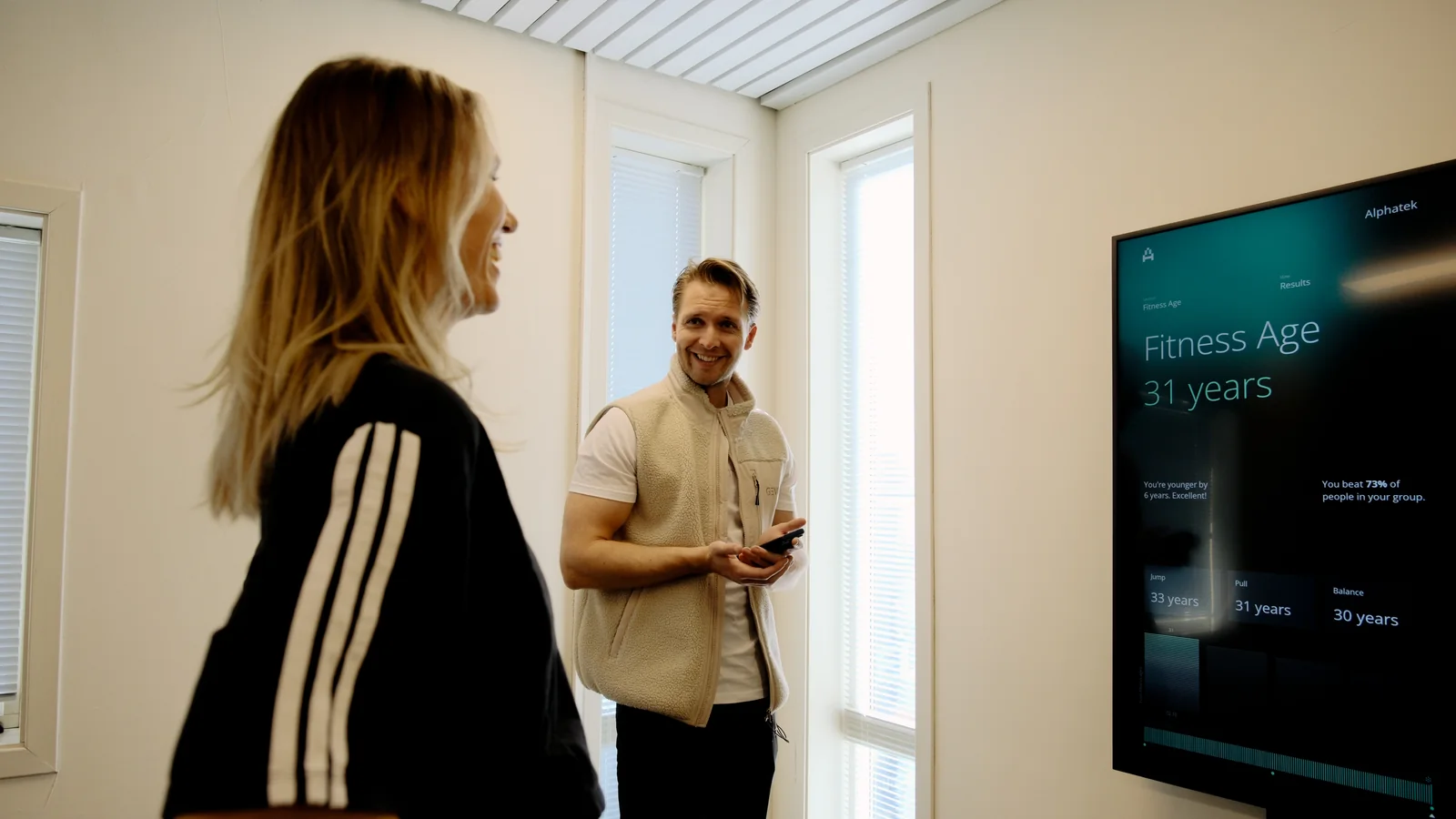
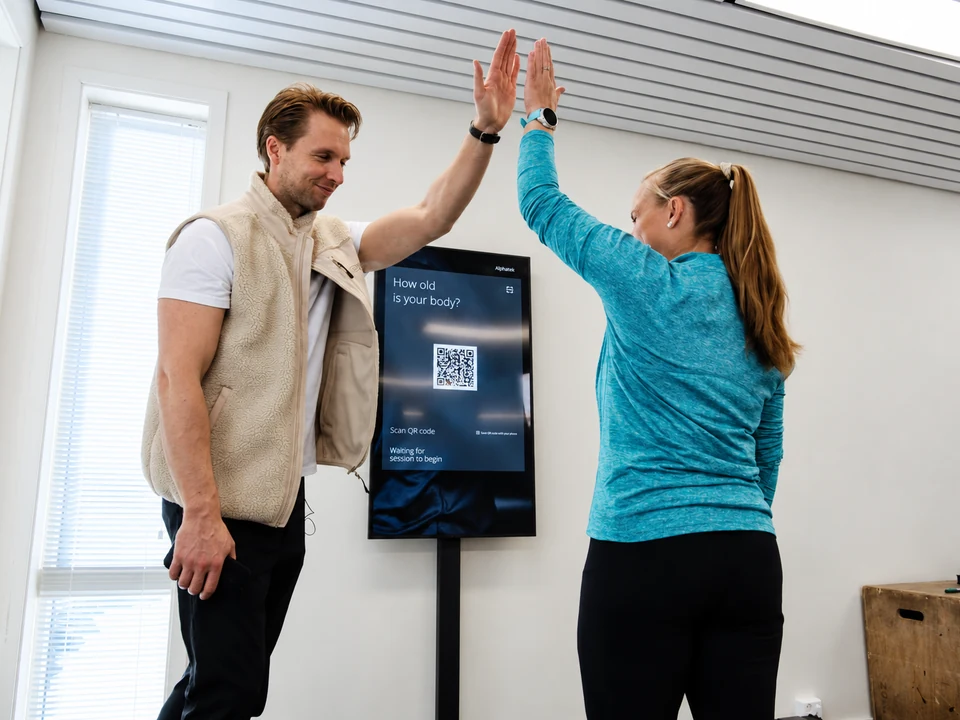
The trainer assesses the starting point and talks about goals with the member.
Next stepA plan, group classes or personal training.
See the workflowFitness centres and gyms
Alphatek is a force platform with a large screen that the trainer controls from a phone. A short assessment of strength, power and balance becomes the start of a conversation with the member: a starting point, a goal and a reason to meet again.
The assessment can give trainers a natural path to follow-up and sales, and your gym new offers to promote.
Use cases
Three situations where the assessment fits into everyday life at your gym.
When a new member starts
The trainer assesses the starting point and talks about goals with the member.
Next stepA plan, group classes or personal training.
See the workflow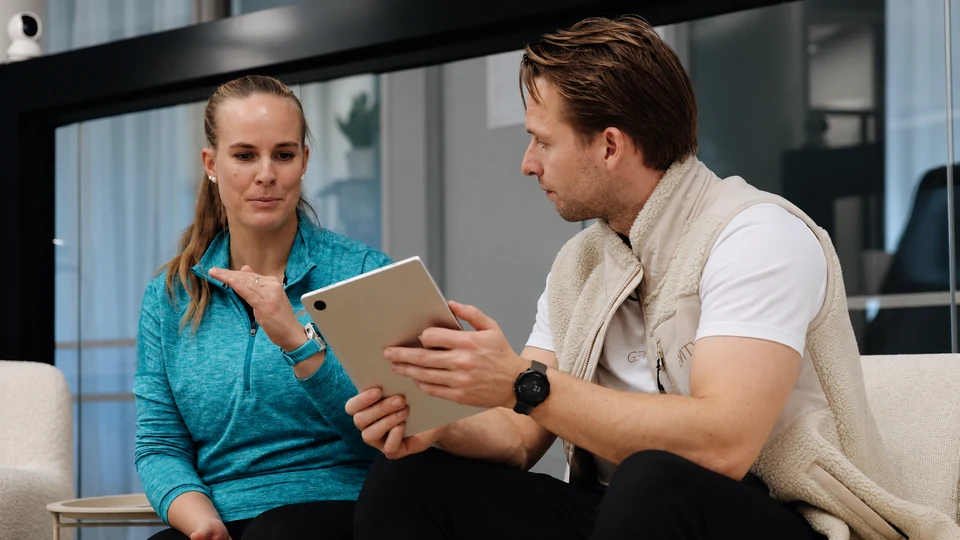
When the member has trained for a while
A new assessment shows progress, and you review it together.
Next stepContinue or adjust the training.
See the workflow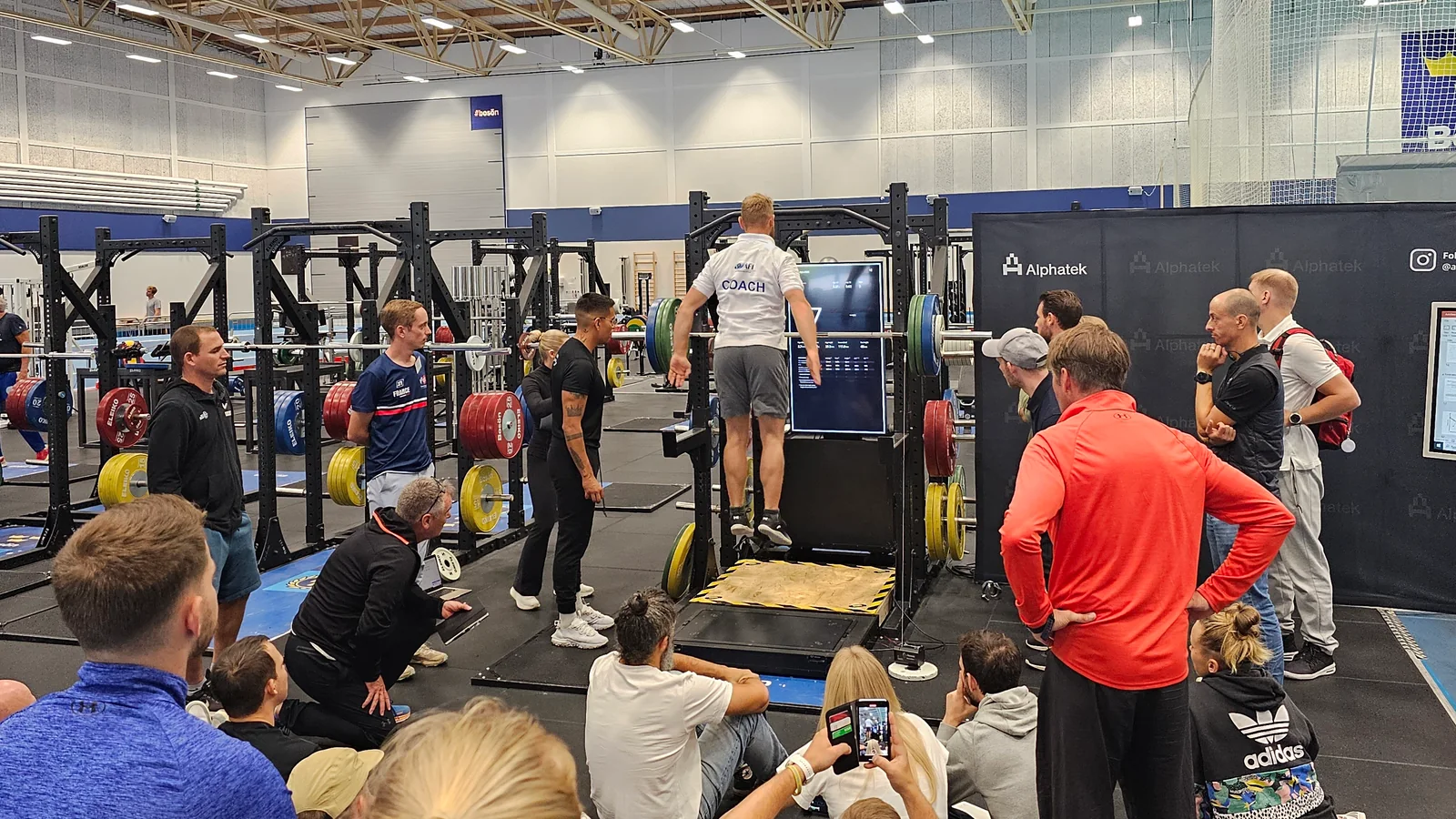
When the gym invites a target group
An assessment and a short conversation, for example for runners or older adults.
Next stepA specific membership offer.
See the examples01 / Build the relationship
Use the assessment to understand the member, find a personal goal and agree on the next meeting. Relevant support can build trust and give members more reasons to stay with your centre.
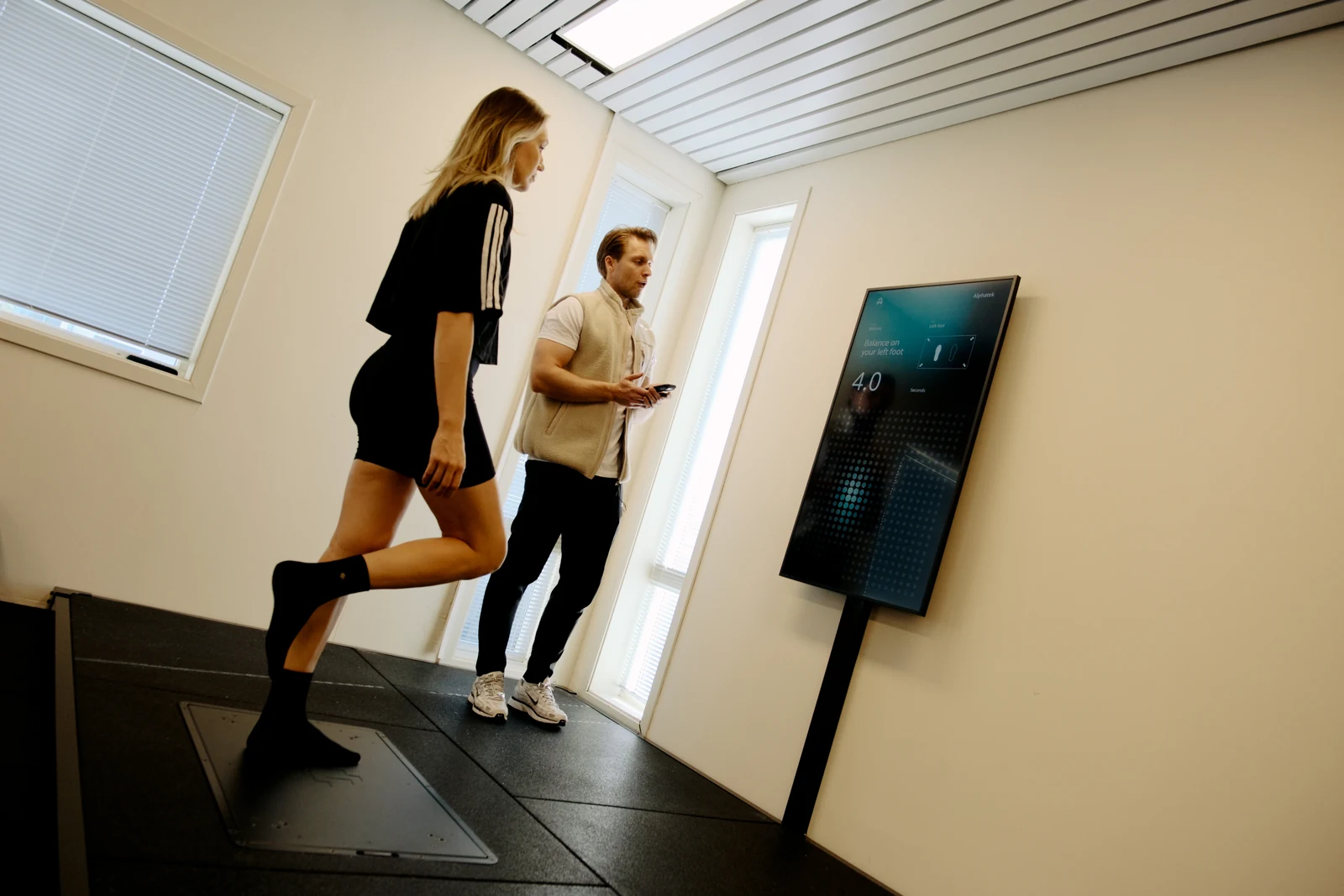
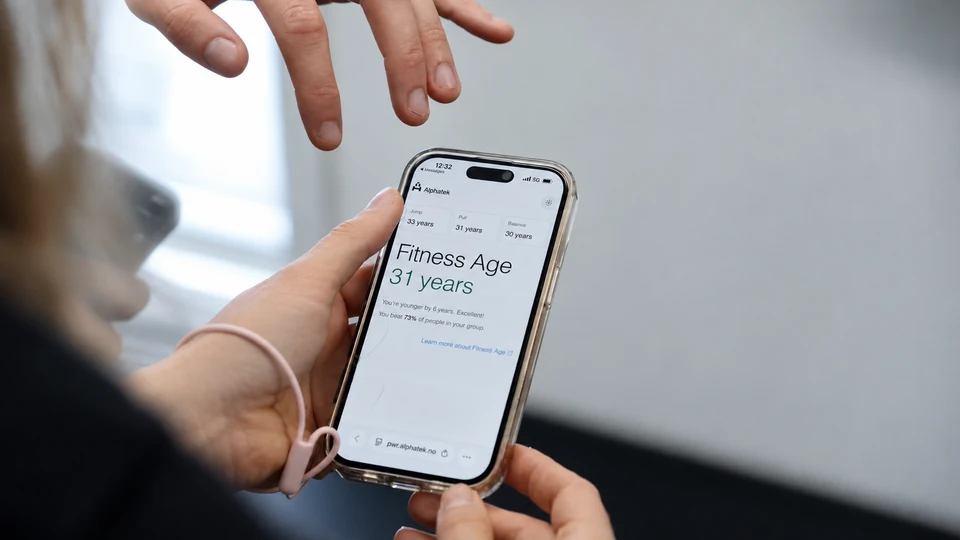
The trainer controls Fitness Age from their phone while the screen guides the member through the exercises. Review the results together, leaving room for questions and personal experience.

Discuss what the member wants to achieve and why it matters. Their goal may relate to daily life, an activity or something they want to master in training.
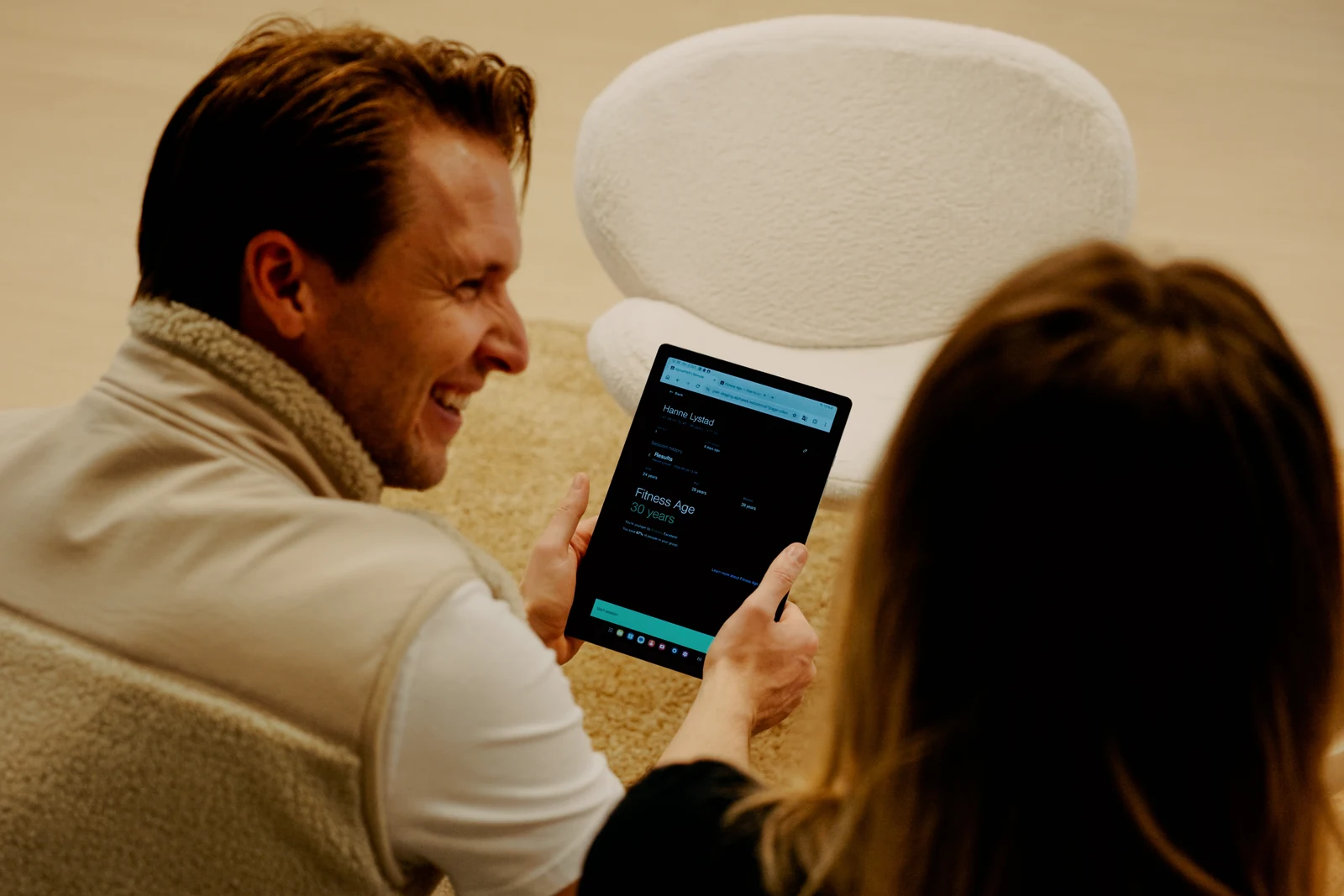
Agree on a specific next step based on the goal. This could be personal training, relevant group classes or training guidance. Set a time to meet again.
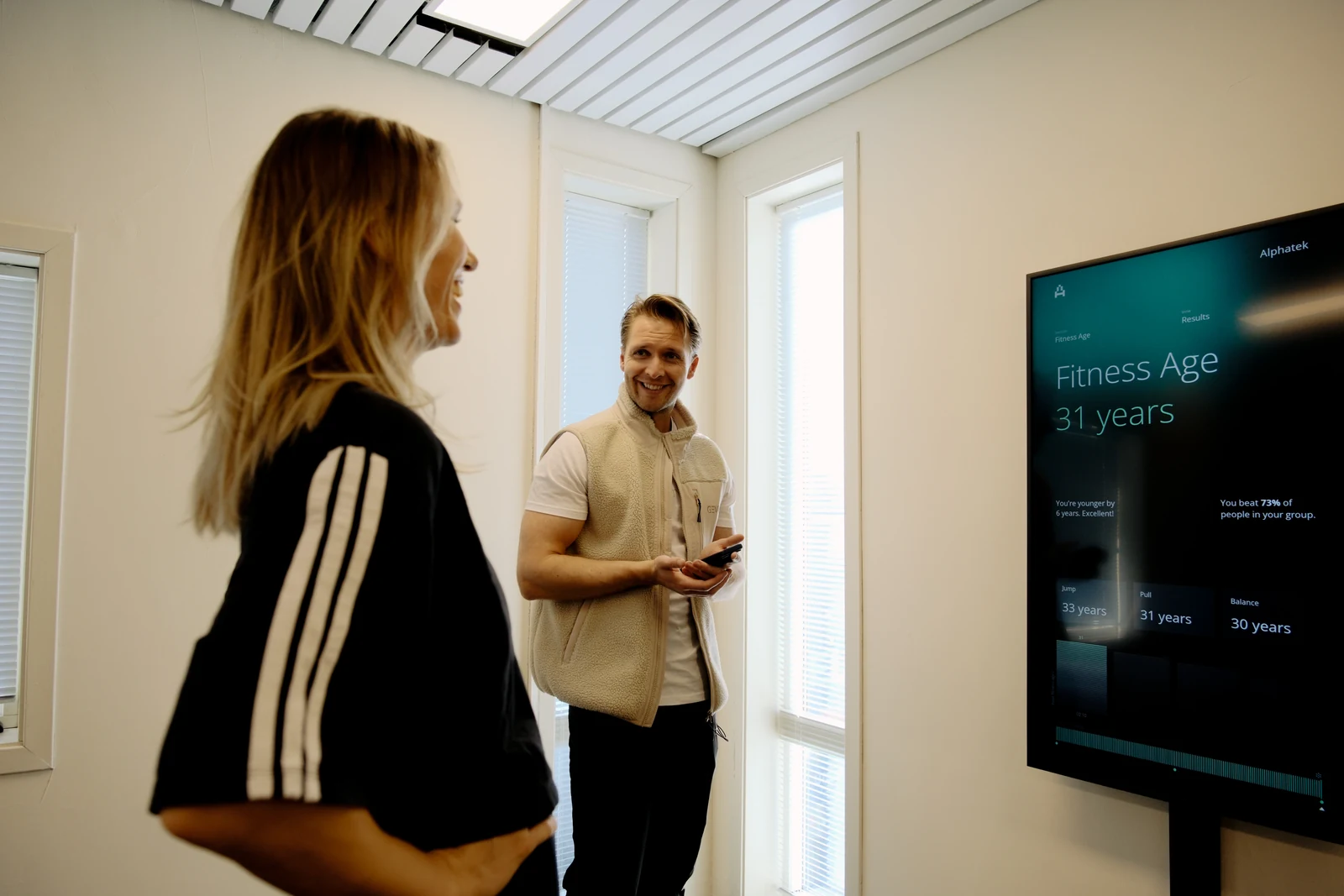
Use a new assessment to review changes together. Discuss the member’s experience since last time and whether their support needs adjusting.
Each exercise gives a measured result, such as jump height in centimetres. The results are compared with people of the same age and gender, and Fitness Age brings strength, power and balance together as one age. The result is not a measure of biological age.
Agree on what the member will work on, what support fits and when you will meet again. Personal training, group classes and independent training can be combined.
A clear agreement makes it easier to follow up next time.
Discuss the member’s training, goals and daily life. Consider together whether closer support from a personal trainer could be relevant. Also look at the individual results. They can improve even when Fitness Age stays the same.
02 / Attract more members
Give people a reason to meet a trainer. An assessment connected to their goals can open the door to your gym and a first personal conversation. Choose an audience to see an example.
Older adults
An offer for older adults who want to maintain strength, function and confidence in daily life.
Strength, function and balance.
Senior Fitness Test
Duration about 20 minSenior assessment with a personal review and tailored training offer.
“What would you like to keep doing confidently in everyday life?”
Start with an activity the person wants to keep doing.
Active adults and newcomers
A quick assessment for recreational exercisers and people who want a starting point for training.
Strength, jumping performance and balance.
Fitness Age
Duration about 5 minA result becomes more meaningful when considered alongside age. Fitness Age compares strength, jump performance and balance with age reference data, giving the member a single number to relate to.
Explore the qualities behind Fitness AgeA membership campaign including Fitness Age and a personal review.
A corporate membership with Fitness Age and a personal introduction for employees with different abilities and goals.
“What would you like to get out of training?”
Let the person describe what would make training worth their time.
Unsure about strength training
An introductory offer for new members who want to feel more confident with strength training.
Live measurements and feedback, including during squats. Measurements support the trainer’s judgement of technique and load.
Technique Analysis
Duration about 5 minGet started with strength training through a personal assessment and technique review.
“What would you like to feel more confident doing in strength training?”
Ask the person to describe an exercise or situation they feel unsure about.
Runners
Reach people who mainly train outdoors with an offer that complements their running.
Tests of the right and left leg, including hop tests. The trainer considers the results together.
Runner Profile
Duration about 15 minA runner assessment, personal review and tailored strength programme, perhaps in partnership with a local running group.
An offer for a company running group with runner assessments, personal reviews and strength training to complement running.
“What would you like to achieve with your running?”
A distance, a race or the enjoyment of running can be the starting point.
Athletes and ambitious exercisers
An offer for individual athletes and local teams looking to develop their physical performance.
Strength and jumping exercises. The trainer considers the test results alongside the demands of the sport.
Performance Screening
Duration about 15 minPerformance assessment and training support for athletes or local teams.
“What would you like to improve in your sport?”
Ask the athlete to describe a specific situation from their sport.
03 / Make the next step clear
Make the personal training offer clear: what the member gets help with, how much support is included and what it costs.
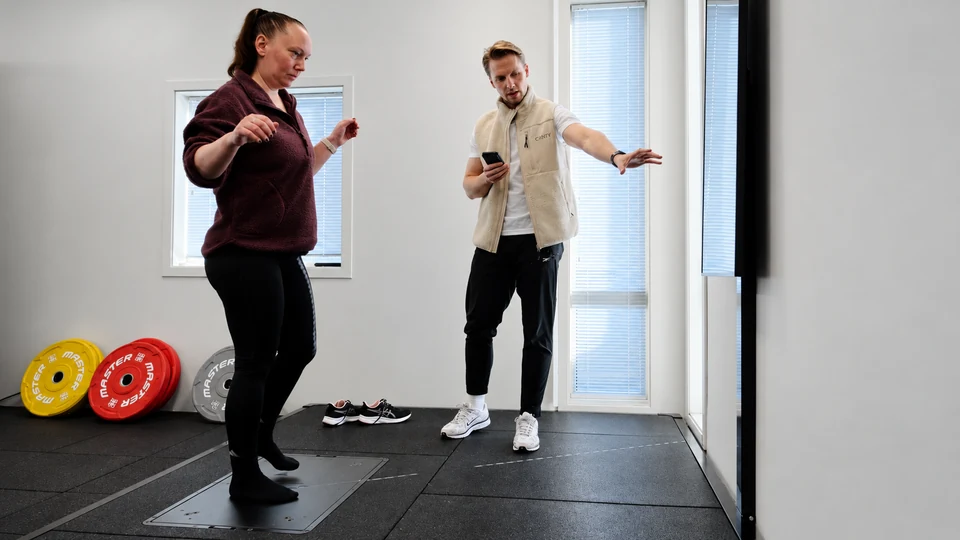
Start with the member’s goal. Explain what you will work on, how the trainer will help and what the offer costs.
The member chooses how much help suits them. Agree on the number of PT sessions, when you will meet and what the member will do independently.
Offer a programme to follow independently, a short starter package or closer support from a personal trainer.
Guidance and a practical plan for members who want to train on their own.
Help getting started, with a reassessment as part of the agreed programme.
Personal training and regular conversations about goals, training and adjustments.
A recurring supplement can include an agreed number of assessments with a results conversation. Choose a scope your team has capacity to deliver.
Define the frequency, price and responsible trainer. Use your centre’s own systems for booking, invitations and reminders.
Include a results conversation so the member gets help understanding the findings. Further training and support remain a separate choice.
Assessments for non-members and companies can be a separate revenue stream. They are excluded from the revenue-per-member calculator.
An example of a shared rule for your team. Define what you include so the same assessment is not priced differently by different trainers.
| Who | Assessment | Purpose |
|---|---|---|
| New member during onboarding | Included | Part of onboarding and a basis for discussing goals and PT. |
| Premium member | Included, with a defined annual allowance | Concrete content for the higher membership tier. |
| Standard member outside their allowance | Paid | A clearly defined additional service. |
| Non-member or company | Paid | A separate revenue stream and an opportunity for further contact. |
A scenario is a starting point for discussion. In a limited trial, you can track what is actually sold, how long delivery takes and which offers members use.
A selection of fitness centres using Alphatek
Swipe for more customers →
From plan to practice
Agree who is responsible, learn the assessment flow and practise with suitable clients. Then make testing part of intro sessions and follow-up. Alphatek helps when you need it.
Your gymChooses one person responsible and the first offer.
AlphatekHelps with placement and takes care of installation.
Your gymYour trainers take the course on their phone. It takes about 15 min.
AlphatekSends the course to your trainers. You can book a workshop with a live walkthrough.
Your gymYour trainers practise the assessment flow with clients where it fits.
AlphatekHelps when you have questions.
Your gymTesting becomes part of intro sessions and follow-up. The person responsible keeps an eye on use.
AlphatekHelp when you need it. The gym manager and PT lead can get weekly email reports on course completion and use by your trainers.
Keep what works. Fitness Age can fit into your existing approach and provide a shared basis for the conversation. Look at how the session ends: does the member have a specific goal, an agreed next step and a date for another review?
Your trainers take the Fitness Age course on their phone. It takes about 15 minutes. You can also book a workshop with a live walkthrough. Alphatek helps when you need it.
Yes. The gym manager and PT lead can get weekly email reports on course completion and use by your trainers. This describes testing activity; you track membership development in your own systems.
Scientific basis
The force plate records force. Measurements are used to calculate results such as jump height. Fitness Age brings together results from strength, power and balance and presents them as an age.
Repeat the assessment under similar conditions to follow progress. Consider changes alongside how the assessment was performed and the member’s experience.
Dahle, Alfaro and Paulsen compared AlphaPWR V2.0 with an AMTI force plate. The study reported small mean differences for the assessed metrics during countermovement jumps.
The comparison concerns the hardware using the same analysis setup. It does not validate the Fitness Age calculation.
Read the summary and original studyPractical questions
What to prepare before installation – and how to get help afterwards.
The setup needs a level, hard floor. Rubber tiles are acceptable. The recommended ceiling height is 275 cm.
See the overall dimensions of each setup in 3D. Space for exercises around the equipment also needs to be considered.
Explore sizes and configurationsThe installation needs 2 power outlets and 2 Ethernet connections using CAT5 cable. Double needs 4 of each. Wi-Fi is not supported for the installation itself.
The network must be tested for latency, bandwidth and stability before installation.
Alphatek helps with placement and handles installation.
Explore responsibilities and trainingContact us at contact@alphatek.ai.
Maintenance is performed by Alphatek personnel unless otherwise agreed.
See a relevant assessment, how members receive their results, and how a trainer can follow up. Bring what you want to achieve at your gym.
What we will cover
Not ready for a demo yet?
Take a Fitness Age assessment at a gym that uses Alphatek and feel what it is like for the member.
Tell us what kind of gym you are, and we will try to put you in touch with a similar customer.
Agree in advance what a successful start looks like, such as how many trainers run assessments and how many assessments lead to a PT conversation. We give you an overview of assessment activity along the way. Agree when to review your experience before expanding to more gyms.