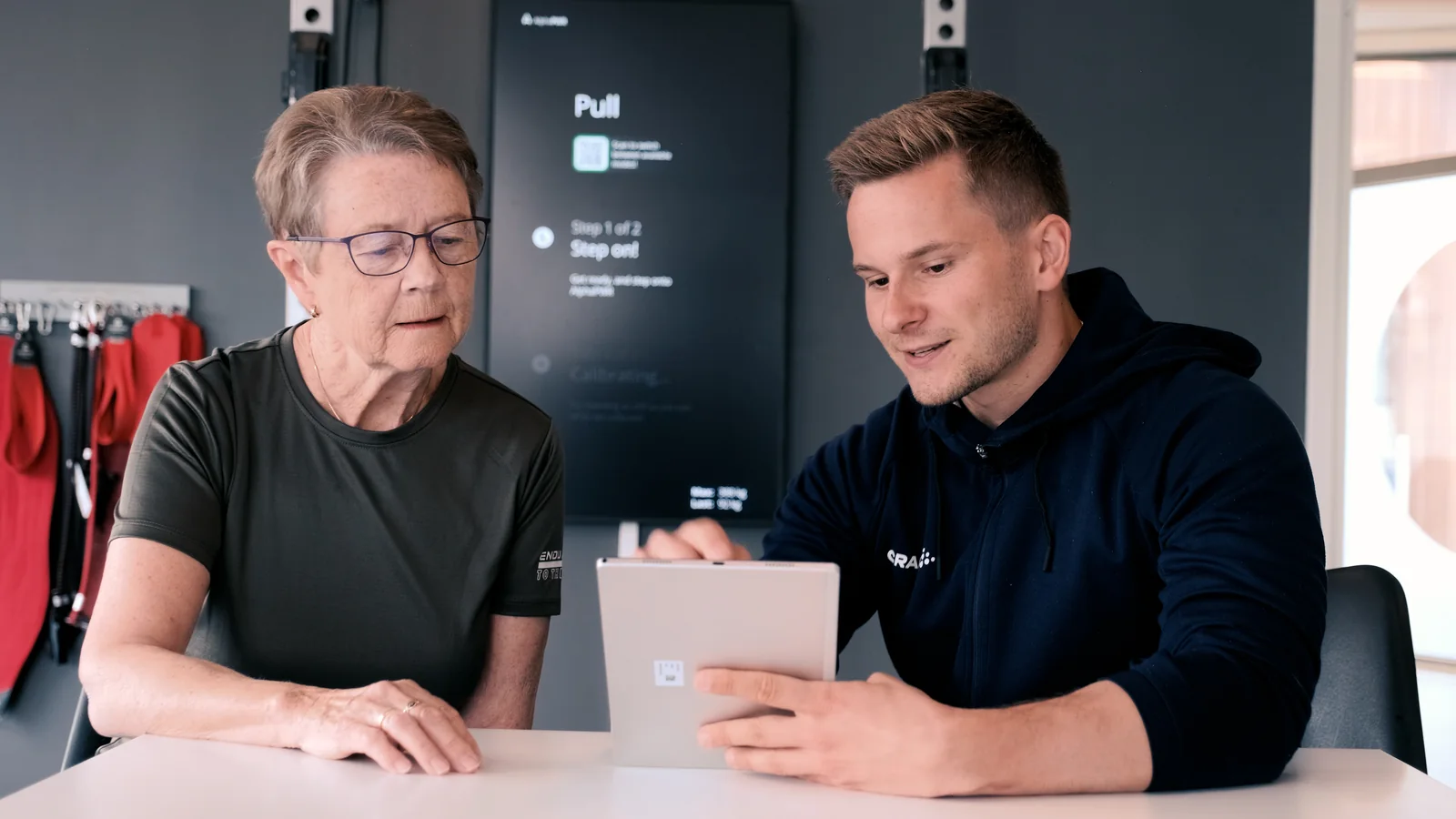
Patients come back to you
The starting point and the measurements are kept at your clinic. When patients want to see how they are doing, your clinic is where they can compare with last time.
Clinics and physiotherapy
Alphatek combines a force plate, a large screen and software for testing and training. Use the measurements to explain the starting point and follow progress together with the patient.
Example: returning to running
Start with what the patient wants to return to. Use relevant tests and a shared review of the results to plan follow-up and consider the next step.
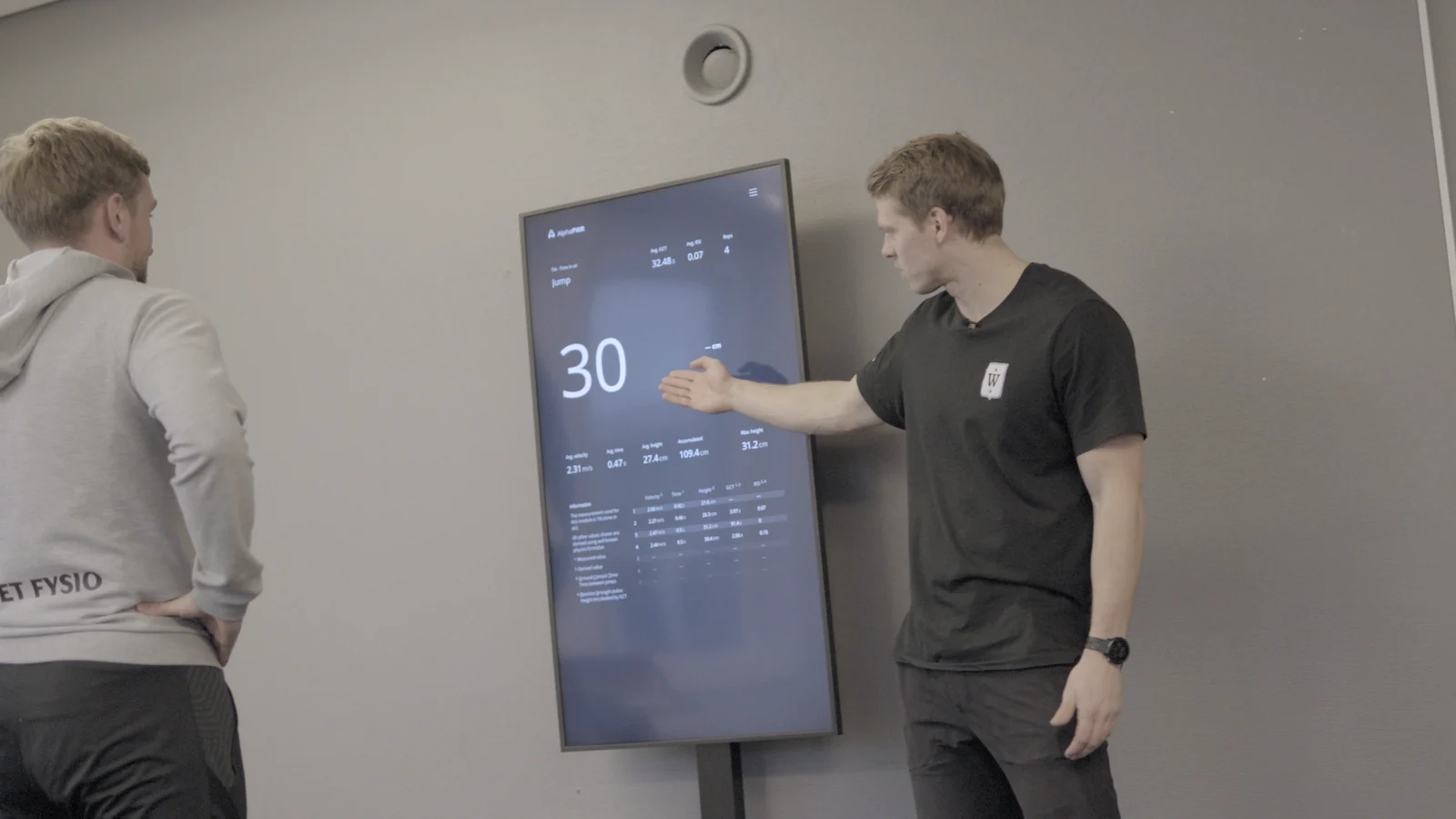
The patient wants to run again. Discuss what they want to return to and what is difficult now.
Choose relevant tests based on the patient’s situation and your examination. Work through the assessment together.
Review the measurements together. Explain what they show and what they cannot determine on their own.
Consider the result alongside symptoms, the patient’s experience and the rest of your examination to agree on the next steps.
Repeat relevant assessments under comparable conditions. Discuss whether follow-up should continue, change or end.
Measurements make progress visible to the patient. That gives the patient a reason to continue, and your clinic a reason for the patient to come back.
The starting point and the measurements are kept at your clinic. When patients want to see how they are doing, your clinic is where they can compare with last time.
When you measure what you are working on, patients see that their follow-up is thorough. Visible progress builds trust.
Several clinics already sell tests as separate services, such as knee, shoulder and senior tests. An assessment with a retest gives a natural next step in the pathway.
Modern tools and objective measurements can make it easier to attract motivated and skilled physiotherapists.
Choose an assessment and see how it works. Use the results to support the conversation with your patient and your clinical judgement.
For patients whose shoulder strength you want to follow up.
For older adults who want to maintain strength, balance and everyday function.
For patients working towards a return to activity or sport.
For patients who want an understandable starting point for further activity.
The study compared AlphaPWR V2.0 with an AMTI laboratory force plate during countermovement jumps. Five recreational athletes completed 124 analysed jumps, with both platforms recording simultaneously. The researchers compared metrics including jump height, mean force and peak force, finding small mean differences in this test setup. Read more about the method, results and limitations.
In a 2023 bachelor's thesis at OsloMet, two physiotherapists described how they use AlphaPWR in assessment and patient follow-up.
One therapist described using measurements of the difference between the affected and unaffected side through different stages of rehabilitation. He found the numbers useful when tailoring the patient's plan.
These are the experiences of two therapists. The thesis did not investigate treatment effectiveness.
Read about the therapists' experiencesA selection of clinics using Alphatek
Swipe for more customers →
Alphatek teaches you how to use the system in everyday clinical practice. You receive training in carrying out assessments, understanding the results and using the reports in ongoing patient care.
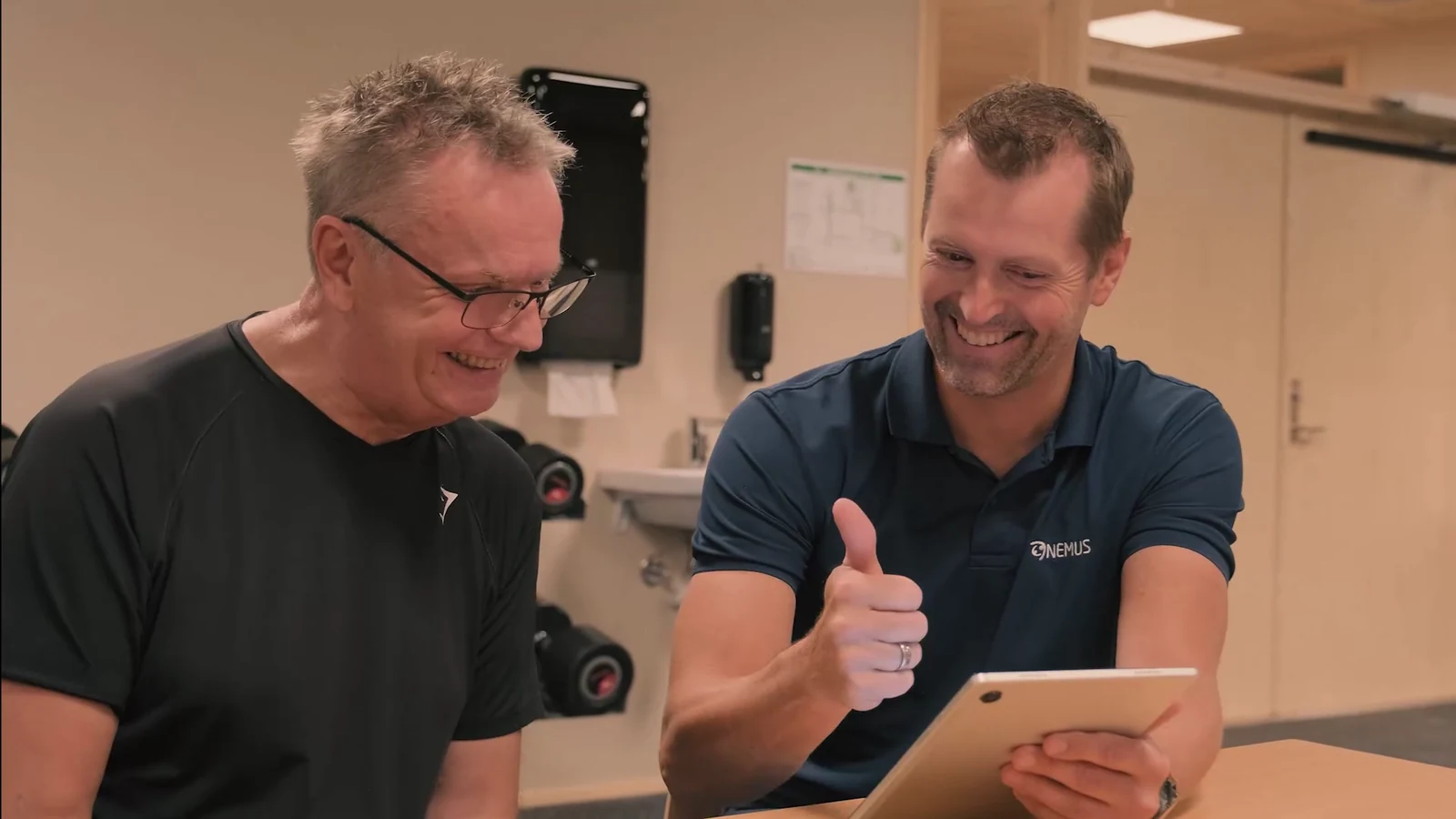
We show a relevant assessment, review the results and explore how the system can fit into your everyday work.
What we will cover
Not ready for a demo yet?
Take an assessment at a clinic or gym that uses Alphatek and feel what it is like for the patient.
Tell us what kind of clinic you are, and we will try to put you in touch with a similar customer.